
距截稿日期还有:
- 00 天
- 00 时
- 00 分
- 00 秒
ICEEES2026演讲嘉宾信息如下:
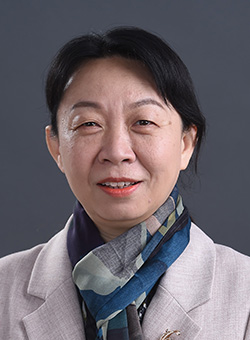
Dr. Xiaohua Yang, Professor
School of Environment, Beijing Normal University, Beijing, China
Biography: Dr. Xiaohua Yang, Professor and Doctoral Supervisor at Beijing Normal University. She has served as a Visiting Professor at the University of Washington, Seattle, USA, and a Visiting Fellow at Princeton University, Princeton, USA. She is primarily engaged in the systematic analysis of water resources, energy, and human settlement environments. She has published over 300 academic papers, authored 6 monographs, and been granted a total of 10 patents and computer software copyrights. She serves as Editor-in-Chief or Editorial Board Member for 6 international journals. Her research achievements have received one Second Prize of the National Science and Technology Progress Award, two First Prizes of the Ministry of Education, and one Second Prize of the Ministry of Water Resources.
Topic: Suitability Evaluation, Prediction, and Optimization Regulation of the Human Settlements–Environment–Energy Coupling System
Abstract: This study is grounded in the macro context of ecological civilization construction and high-quality development in the new era, closely adhering to the people-centered core concept. It develops a theoretical framework for assessing the suitability of the Human Settlement-Environment-Energy (HSEE) coupled system. By comprehensively employing methods such as mathematical statistics, geographic information systems, deep learning, and multi-objective optimization algorithms, the study systematically analyzes the spatiotemporal evolution patterns, future development trends, and optimal regulation pathways of the HSEE coupled system suitability across 30 provincial-level administrative regions in China from 1965 to 2050. This research holds significant theoretical and practical value for improving regional human settlement quality and promoting the coordinated development of resources, environment, economy, and society.
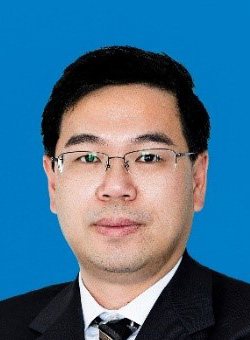
Dr. Xi Chen, Professor
Wu Jieh Yee School of Interdisciplinary Studies, Lingnan University, Hong Kong Special Administrative Region, China
Biography: Dr. Xi Chen is Chair Professor and Dean of the Wu Jieh Yee School of Interdisciplinary Studies at Lingnan University. He received his M.S. from Tsinghua University, and Ph.D. in Solid Mechanics from Harvard University, and spent 20 years as a professor in the Department of Earth and Environmental Engineering at Columbia University, before joining Lingnan in 2023. He received numerous awards including the NSF CAREER Award, the Presidential Early Career Award for Scientists and Engineers (PECASE), ASME Sia Nemat-Nasser Early Career Award, ASME Thomas J. R. Hughes Young Investigator Award, and SES Young Investigator Medal. He is a Fellow of ASME and has been a World’s Top 2% Most-cited Scientists published by Stanford University since 2019. He has published over 500 journal papers with a h-index over 80. He uses multiscale theoretical, experimental, and numerical approaches to investigate various research frontiers in engineering science addressing real-world challenges in energy, environment, nanotechnology and biology. His recent work in carbon neutrality has been recognized by many top awards, including No. 1 Award in Direct Air Capture and overall Top 10 in Tencent Carbon X Grand Competition, No. 1 Award in Carbon Neutrality in 6th Zhongguancun Innovation Competition, and No. 1 Prize in Bluetech Carbon Neutrality Pioneers Award. He established Asia’s first direct CO2 air capture factory, and China’s first carbon negative industrial park zone.
Topic: Addressing Climate Change: Negative Emission Based on AI-Driven Evolution of Advanced Materials
Abstract: To address the global challenge of climate change and sustainability, revolutionary solutions are needed to develop highly efficient pathway for mitigating carbon dioxide and greenhouse gas emissions. The “Holy Grail” is engineered removal of CO2 directly from the atmosphere, known as negative emission. Conventional carbon capture method developed for power and chemical plants does not work well for air capture, due to the very different CO2 concentration in flue gas and air. We present a disruptive approach of DAC (direct air capture of CO2), which is enabled by unconventional reverse chemical reaction driven by water quantities in nanopores. The humidity-swing system absorbs CO2 from the air when the surrounding is dry, whereas releases CO2 when wet. AI-driven material and system design is employed to significantly promote DAC capacity and efficiency, leading to perhaps the world’s cheapest solution of negative emission. The carbon loop is further closed by distributed and need-based capture of CO2 and various pathways of CO2 conversion, forming the technological roadmap of distributed carbon capture, utilization, and sequestration (distributed CCUS). The future prospects of engineering the carbon loop and grand cycles of sustainability are also discussed.
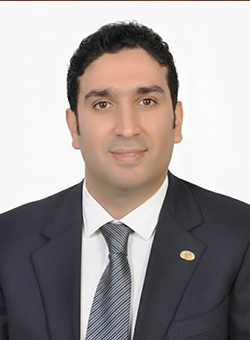
Dr. Mostafa Ghasemi Baboli, Professor
Yangtze Delta Region Institute (Huzhou), University of Electronic Science and Technology of China, Huzhou, China
Biography: Dr. Mostafa Ghasemi Baboli is a distinguished Professor of Chemical Engineering at the University of Electronic Science and Technology of China (UESTC), Yangtze River Delta Institute, Huzhou. He has been continuously recognized among the world’s top 2% of scientists by Stanford University since 2020, reflecting his sustained global research impact. In 2024, he was also selected as a Provincial Talent of Zhejiang Province, highlighting his contribution to scientific innovation and regional development in China. Professor Ghasemi is internationally recognized for his pioneering research in sustainable wastewater treatment, renewable energy systems, and advanced membrane science. His work focuses on developing energy-efficient, low-carbon technologies at the water–energy nexus, with particular emphasis on microbial fuel cells (MFCs), forward osmosis (FO), and nanocomposite membranes. His innovative research on hybrid MFC–FO systems and carbon nanotube-enhanced membranes has advanced the field of energy-positive water purification and desalination, improving efficiency, fouling resistance, and resource recovery. Before joining UESTC, Professor Ghasemi served as an Associate Professor at Sohar University, Oman, for five years, where he played an active role in academic leadership and interdisciplinary research. Earlier, he held academic appointments at Universiti Teknologi PETRONAS (UTP) as an Assistant Professor and at the National University of Malaysia (UKM) as a Senior Lecturer and Research Fellow. Professor Ghasemi has published extensively in high-impact international journals such as Energy, Renewable Energy and Desalination, and has co-authored influential studies on the intelligent optimization of bioelectrochemical systems, integrating artificial intelligence, computational modeling, and experimental validation. His research vision centers on circular water–energy systems, resource recovery, and climate-responsive technologies, positioning him as a leading figure in sustainable process engineering.
Topic: From Waste Treatment to Renewable Energy Production: A Next-generation Microbial Fuel Cell Concept
Abstract: Microbial fuel cells (MFCs) represent a promising renewable energy technology for simultaneous wastewater treatment and electricity generation; however, their practical deployment remains limited by pH imbalance, membrane cost, and long-term operational instability. In this study, a comprehensive comparative evaluation of cation exchange membranes (CEMs) and anion exchange membranes (AEMs) is conducted to elucidate their roles in governing electrochemical performance, stability, and bioelectrochemical functionality of MFCs. A low-cost PTFE-based AEM is benchmarked against the widely used Nafion 117 membrane under identical operating conditions using real palm oil mill effluent (POME) as the substrate. The results demonstrate that AEM-based MFCs exhibit superior power density, reduced charge transfer resistance, and significantly enhanced long-term stability over extended operation exceeding 600 h. These improvements are attributed to efficient OH- transport, which enables intrinsic pH self-regulation at both electrodes, mitigates anode acidification, and promotes favorable conditions for oxygen reduction at the cathode. In contrast, CEM-based systems suffer from pronounced pH gradients and performance decay. Beyond material comparison, this work highlights a paradigm shift in MFC design, positioning membranes as active electrochemical regulators rather than passive separators. The findings provide critical insights into membrane-driven control of microbial and electrochemical processes and establish AEM-enabled MFCs as a next-generation platform for stable and scalable renewable energy recovery from wastewater.

添加组委会微信
(王老师)
© 2015-2026第十三届能源,环境与地球科学国际会议 版权所有
